
Automotive
Automation in the Automotive Industry
Increase operational efficiency and improve effluent quality.
Transforming Automotive Manufacturing with Automation
Automation has been at the heart of the automotive industry for decades, driving innovations that have revolutionized how vehicles are produced. From the first industrial robots to today’s advanced AI-driven systems, automation continues to push the boundaries of what’s possible in automotive manufacturing. At SOFAC e-SYSTEMS, we are dedicated to providing cutting-edge automation solutions that enhance productivity, safety, and efficiency in automotive factories worldwide.
Factory Automation: The Backbone of Vehicle Production
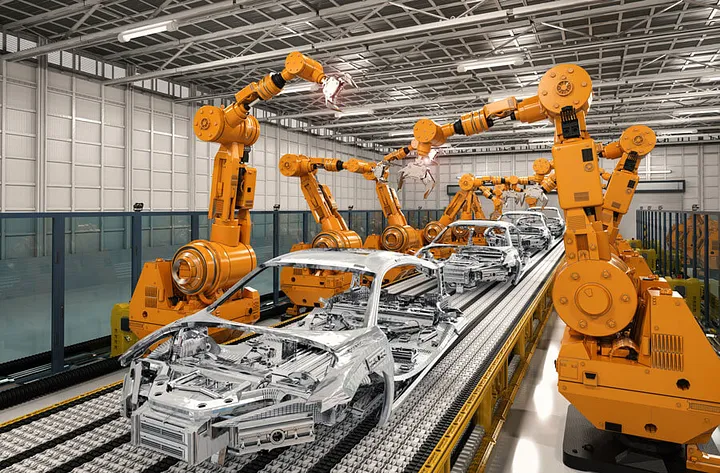
In modern automotive factories, automation is integrated into nearly every stage of vehicle production. From welding and assembly to inspection and testing, advanced robotics, machine vision, and automated systems work together to streamline processes, reduce costs, and increase output. While some manufacturers use partially automated systems, others rely on fully automated production lines that operate 24/7, requiring minimal human intervention.
Car Assembly Robots: Precision and Speed Redefined
- Robotic arms in car assembly plants are essential for tasks that demand high precision and speed, such as screw driving, windshield installation, and wheel mounting. These robots outperform human capabilities, delivering faster production times, reducing error rates, and minimizing risks to human workers. By implementing these technologies, automakers can achieve higher efficiency and safety standards.
Robotics for Collaborative Applications: Flexibility Meets Efficiency
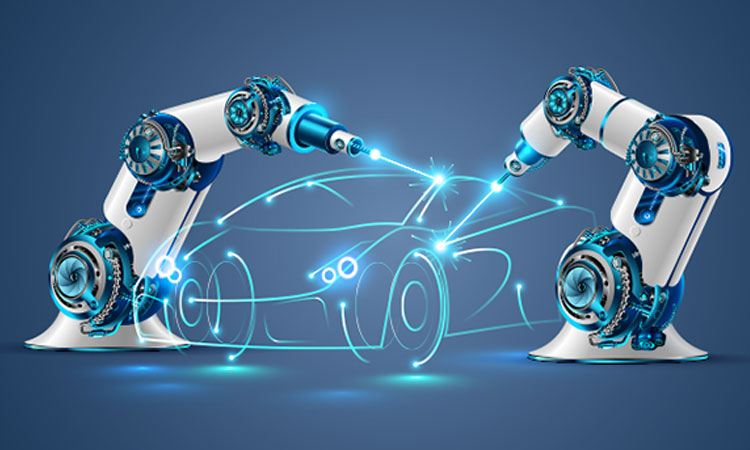
Collaborative robots, or cobots, offer a more flexible, lightweight alternative to traditional industrial robots. Designed to work alongside human workers, cobots enhance efficiency without the need for significant modifications to the manufacturing floor. These robots are ideal for tasks that are ergonomically challenging, allowing human employees to focus on more complex and creative aspects of production.
Robotic Process Automation (RPA): Streamlining Back-Office Operations
Beyond the production line, automation also plays a crucial role in the business side of the automotive industry. Robotic Process Automation (RPA) uses software to automate repetitive, rules-based tasks, such as inventory management, supplier onboarding, and regulatory compliance. By streamlining these processes, RPA reduces operational costs and improves accuracy, allowing automotive companies to allocate resources more strategically.
Artificial Intelligence (AI): Driving the Future of Automotive Innovation
Artificial Intelligence is a key driver of innovation in the automotive sector, influencing everything from vehicle design and production to customer service and predictive maintenance. AI-powered systems enable smarter manufacturing processes and are integral to the development of autonomous vehicles. While fully driverless cars are still on the horizon, AI is already transforming transportation and manufacturing, ensuring that the automotive industry stays at the forefront of technological advancements.

So Fac E-Systems
We are expertise in providing the Complete Instrumentation Solutions for Process Automation & Facility Management.
Contact Us


